ATMOSPHERE
The only moon with real air
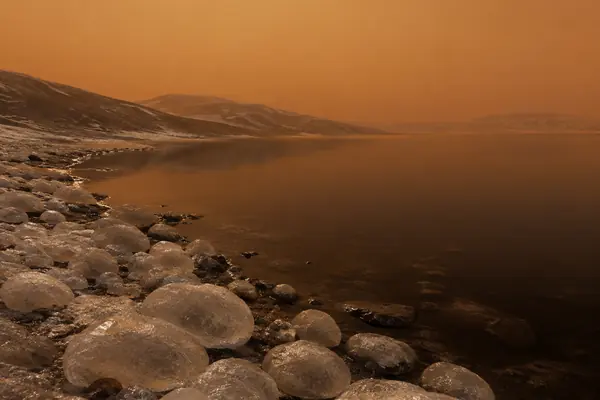
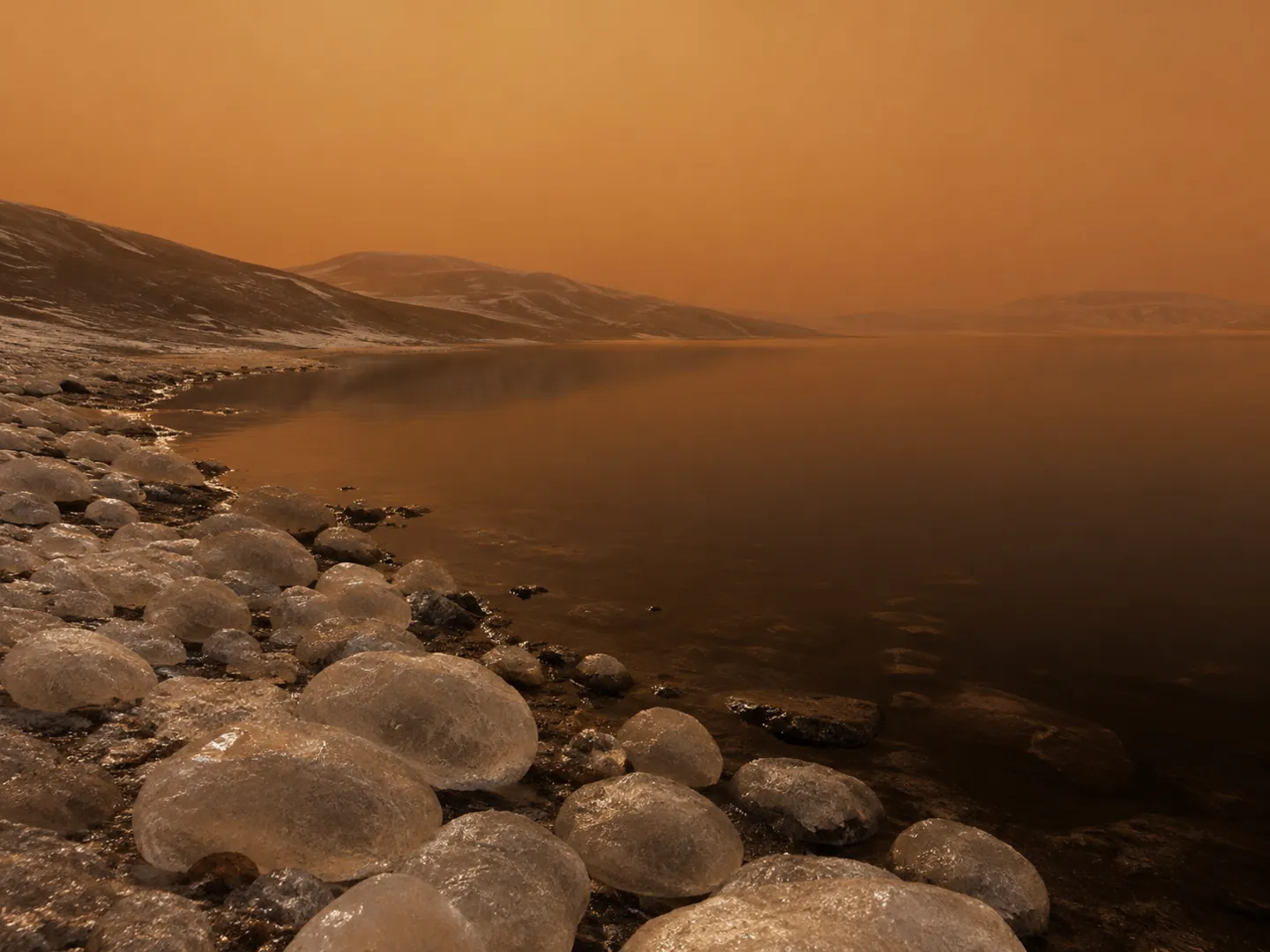
Titan's atmosphere is about 95% nitrogen and 5% methane. Sunlight breaks the methane apart, making an orange smog that hides the surface from ordinary cameras.
See the numbers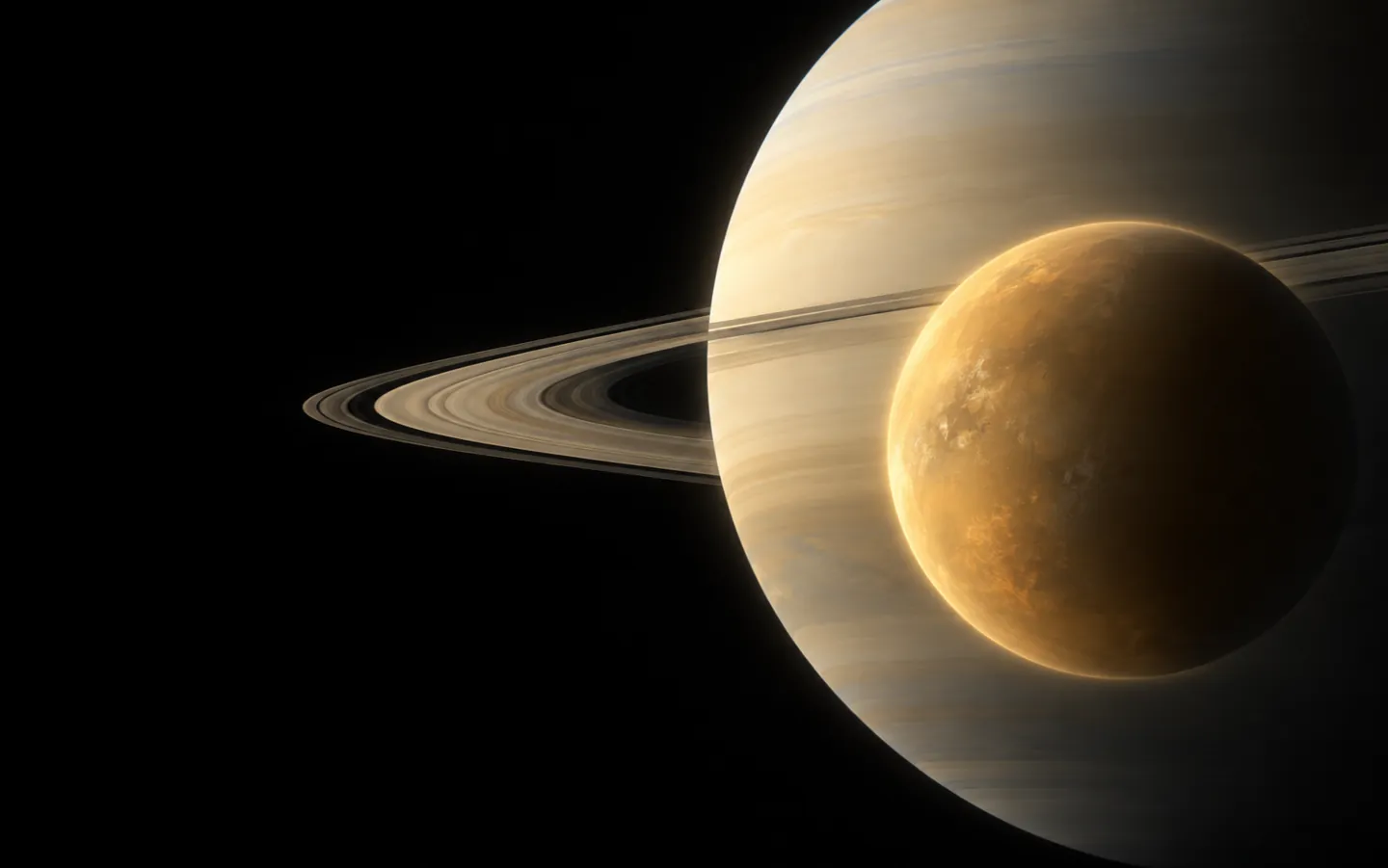
WHAT NASA AND ESA HAVE FOUND
−179 °C at the surface
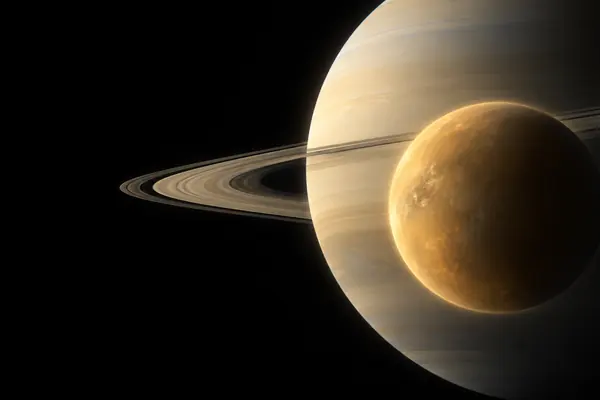
AI-generated image, not a photograph of a real person or place.
The most Earthlike world we know is also one of the coldest.
Saturn's largest moon has clouds, rain, rivers, lakes and seas, all made of liquid methane and ethane. Under its orange haze and icy crust, spacecraft data suggest an ocean of salty water.
THE SHORT ANSWER
Titan has weather, rivers and seas.
The ingredients are just strange to us.
ATMOSPHERE
Titan's atmosphere is about 95% nitrogen and 5% methane. Sunlight breaks the methane apart, making an orange smog that hides the surface from ordinary cameras.
See the numbersLIQUIDS
It is the only place besides Earth known to have liquids on its surface: methane and ethane fall as rain, carve rivers and fill lakes and seas, then evaporate again.
Compare with EarthNEXT
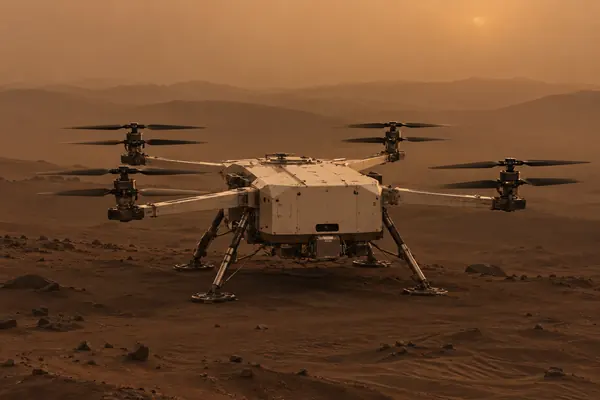
NASA's Dragonfly is due to launch no earlier than July 2028 and arrive in late 2034, then fly between sites for a planned 3.3-year mission.
How we explore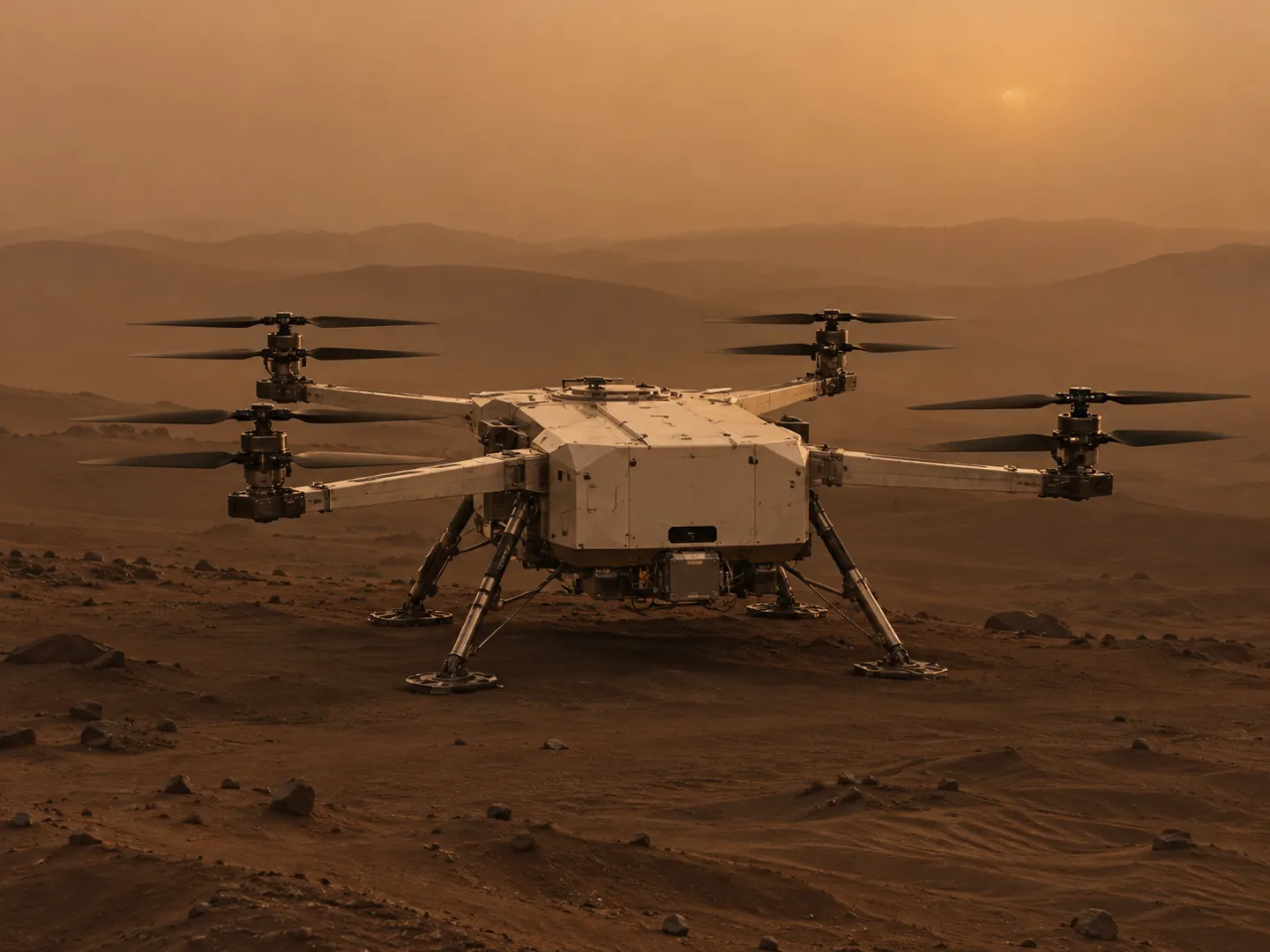
FOUR VISITS TO TITAN
Titan was discovered in 1655. Spacecraft have been revealing it, layer by layer, since 1979.
Pioneer 11 became the first spacecraft to explore Titan as it flew through the Saturn system on 1 September 1979.
Cassini's gravity measurements revealed that Titan hides an underground ocean of liquid water, likely mixed with salts and ammonia.
ESA's probe landed on Titan and measured radio signals suggesting an ocean 55 to 80 km below the icy ground.
The rotorcraft will make a flight every one to two Titan days, about 16 Earth days each, sampling dunes and a crater.
TWO NUMBERS WORTH KNOWING
One figure from the ground,
one from the air above it.
−179 °C
Temperature on Titan's surface
At about minus 179 °C, water ice behaves like rock, and dunes of dark hydrocarbon grains, thought to look like coffee grounds, stretch across the equator.
SURFACE · NASA
+60%
Surface pressure compared with Earth
Titan's surface pressure is about 60% greater than Earth's. Its weaker gravity lets the atmosphere extend to nearly 600 km, about ten times higher than ours.
ATMOSPHERE · NASA
On 14 January 2005 ESA's Huygens probe descended for two and a half hours under parachutes to Titan's surface: the most distant landing ever made on another world.
A QUICK EARTH CHECK
Pick a feature to compare Titan with Earth. The bar shows how different Titan is from home.
Figures from NASA's Titan facts page.
COULD ANYTHING LIVE THERE?
A global ocean of liquid water beneath the ice puts Titan among the few worlds in our solar system that could have habitable environments, for life as we know it.
Its surface lakes of methane and ethane might also host life very different from Earth's. There is so far no evidence of life on Titan. Dragonfly is designed to study the chemistry that came before biology, not to detect life.
In conversation
Yes. Titan is nearly 50% wider than Earth's Moon and larger than the planet Mercury. It is the second largest moon in the solar system, after Jupiter's Ganymede, which is only about 2% bigger.
Yes, but not water. Methane condenses into clouds and falls as rain, filling rivers, lakes and seas, then evaporates back into the sky, much like Earth's water cycle.
Sunlight and charged particles break apart methane and nitrogen high in the atmosphere. The pieces recombine into organic chemicals that form a thick orange haze.
Yes. ESA's Huygens probe, carried by NASA's Cassini spacecraft, landed on 14 January 2005 after a two-and-a-half-hour parachute descent. ESA describes it as the most distant landing ever made on another world.
It was discovered on 25 March 1655. The discoverer called it Luna Saturni, Latin for Saturn moon; the name Titan, after the Titans of Greek mythology, came later.
Each figure on this page comes from the sources below.
ABOUT THIS NAME
doodletitan.com is part of the DoodleSale portfolio. It isn't in an auction right now, but you can ask about leasing it.